Translations
There is an Italian saying:
"a translator is a traitor"
Is it true?

If you ever needed translations maybe you wondered "What is so special about doing a translation, where is the difficulty? You only have to replace words in a language with the same ones in another language." Well, it's not exactly so.
I started translating a bit by accident. I had learned English because I liked it, also by staying several times in United Kingdom and reading several music books that I couldn't find in Italian. Then it happens that somebody knows you know a language and they ask you "Can you please translate these?... Can you help me?..." So I started, but soon I realised that it was not only about "replacing words in one language with the same ones in another language", but that it was necessary to tackle problems created by untranslatable words or sentences and, in a way, rewrite the text. Then simply for my personal interest, I started reading books on how to translate, books explaining how to tackle and solve these problems, and so far I've done several translations of musical subjects (four books on violin and viola playing, one about an opera, two musical tales, an educational music computer game) and much more.
Testimonials about my translations
"I have every confidence in the thoroughness of Monica's work, and no hesitation in recommending her to others who need an efficient and cost-effective translation service."
Andrew Spinelli www.ingleseperfetto.com
"There are many different ideas about what makes a good translation, and different kinds of translation job doubtless call for different kinds of expertise. Often it is said that a translator should always translate into his or her native language. I disagree. As a scholar, what I want to be sure of is that the translator has understood every nuance of the original text as accurately as possible. That means I prefer to employ a native user of the language the text is written in, and preferably someone with an expert understanding of the subject being discussed. I have been very happy with Monica Cuneo's translations of various Italian texts concerned with opera. She has
translated them with great fidelity, explained the 'untranslatable' where appropriate, and her expert knowledge of music has allowed her to confidently understand a lot of specialised terminology. Furthermore, she does not consider translation to be a one-step process, and has happily answered questions and responded to suggestions concerning her translations, the first versions of which we have treated as 'work in progress'. For anyone who wants this sort of active relationship with a translator, I recommend her very highly indeed."
Prof. David Chandler
Professor in English Literature, Doshisha University, Kyoto
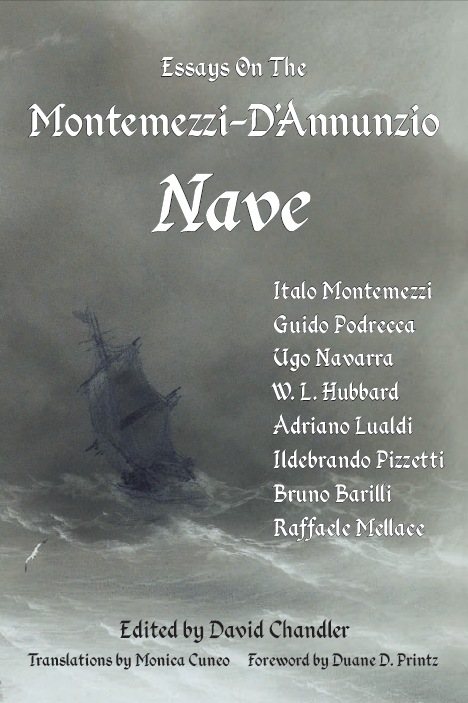
for whom I translated articles for his book about the opera La Nave
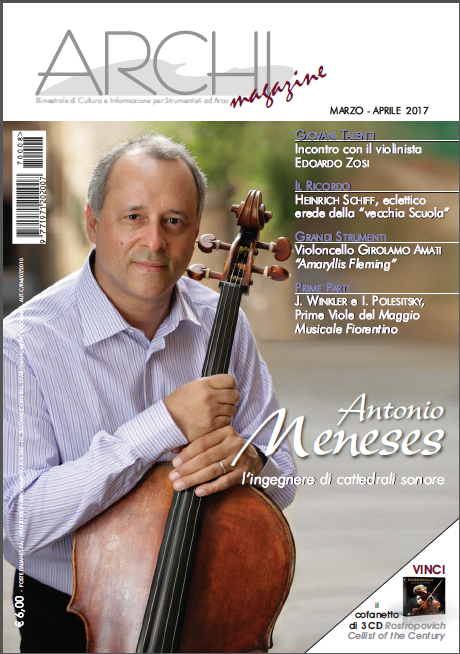
Read one of my music
translations: a concert programme for the
London Symphony Orchestra, Shostakovich Cello concerto (my name is at the end of the article).
Automatic translations?
In
Italian there is the expression "traduttore, traditore" ("a translator
is a traitor") which expresses the
possibility, the risk that by translating a text its meaning or style
can get betrayed.
An
automatic translator will surely be a traitor of the text, because it
cannot understand the nuances, the differences in context and
therefore
the specific meaning of a word, it cannot understand when to
translate literally (word for word) or change words in order
to
keep the sense.
An
automatic translator is good to understand more or less the meaning of
a not too complicated text or to have a good laugh, but if you need a
properly done translation, it has to be done by a professional
translator. Moreover, in all languages many words have more than one
meaning depending on the context; there are
conventions, some things have to be translated while others
don't
and an automatic translator is very unlikely to be
able to
recognize all this.
There are several programs that, in a way, do some sort of
automatic translation. What they actually do is this: they store in a memory
all the expressions or technical words translated, so that if the
same text, or another one, contains a sentence that
has
already been translated and saved (by the translator) in the
memory, the program prompts the translator to use
that same
translation and saves him a good deal of time. Anyway, it's always the
translator who, at the beginning, decides how
to translate a
particular sentence or word and saves it.
This software
to help with translations (called CAT tools, Computer
Assisted
Translation tools) are used especially
to translate texts
where the same sentences are repeated many times and have to
be always the same, like for example, technical manuals
with instruction for use and all software. If
the translator had to manually re-translate the same sentences
it would take him much longer and there could be some slightly
different translations for the same sentence. Anyway, for the
translation of literary and specialist texts, they'll need to be done
by hand.
Translating:
it's another kettle of fish
As already said, some expressions don't exist in another language, or
rather, each language has its own typical expressions and to me knowing
them is fascinating, because they make you better understand
the culture of a country, of a people.
Translated literally, these idiomatic phrases don't make any sense at
all, therefore the translator has to understand what they mean in the
source language and then find an equivalent or
similar expression in the target language that keeps
the
sense, the original meaning, even though with different words. Here
are
a couple of examples.
In Italian È
un altro
paio di maniche literally means, roughly, It's a different pair of sleeves,
which in English doesn't make sense but whose
meaning corresponds to It's
another kettle of fish.
Another example is the proverb One swallow doesn't
make summer. In Italian there is a very similar proverb, the
only difference is that is states: Una rondine non fa
primavera, which means One
swallow doesn't make spring,
because swallows arrive to Italy earlier during their migration
from Africa. Another example is when you want to say that
something costs you a lot, in English they say It costs an arm and a
leg, while in Italian they say Costa
un occhio della testa, which means It costs one of your eyes.
Therefore a literal translation would be "correct"
but would not reflect this proverb usage in another country (therefore,
it would actually be wrong). So, it has to be adapted to the other
country usage (by the way, this is called "localization").
As you can see, such expressions are funny, but if translated badly
they can
distort a text and make it incomprehensible.
The importance of being faithful
Here is another example of a translation in which keeping the
text meaning is necessary and more
important than translating the exact words, for lack of a corresponding
word: it is the title of the play The
importance of being earnest,
by Oscar Wilde. This is exactly the case where the translator
can really become a traitor of the (double)
meaning of the text and of the author's intentions.
Oscar Wilde plays with the omophony (same sound) of
the words earnest
and Ernest:
being it a play, to be performed in a theatre, rather
than a novel to be read, the audience hears the
same sound of the two words, they don't see them written,
therefore the pun can exist.
Ernest
is
simply the name Ernesto
earnest
means
serious, honest, convinced, in good faith, sincere...
Since in Italian there is no word that sounds like the name
Ernest and has also the other meaning, it is necessary to find a
different word that encloses both meanings.
I've seen this title translated in different ways,
more recently translated as L'importanza
di
chiamarsi Ernesto, (The importance of being
called Ernest) which translates the word earnest
in Ernesto,
thus emphasizing the male name. However, by doing this, all the
double meaning is lost. The play
amply exploits the double meaning deriving from the
presence of a man by name Ernest who
was earnest,
that is serious, honest, convinced, in good faith, sincere... (I wonder
how the translator managed to render in Italian the all the
witticism that in the original text
has a double meaning!)
Since Wilde in the title writes earnest
(not Ernest), it means that he meant to give more importance to the
personal quality than to the name. Moreover, in the play there are
a lot of equivocations and it's clear that Wilde wanted to emphasize
the importance of
being serious, honest, convinced, in good faith, sincere...
In Italian there is a male name, Franco, that can lend itself
to this double meaning and in the past I had seen this title
translated in L'importanza
di essere franco. Indeed, franco
(frank) also means honest,
sincere and therefore, even though it's not the exact
Specialized translations
A professional translator can translate
any general or
slightly technical text, but if
the translation requires
the specific knowledge of a subject, it's necessary that the
translator is
specialized in that subject, because he'll know
the technical
terms used, the procedures, the situations and thus
will be
able to understand the original text properly and explain it in
another language. That's why translators often have, or have
had,
also another job or
specialist study (for example they have a degree in
medicine,
engineering, law, geology etc.) that enables them
to translate
highly specialized texts.
This applies also to musical translations and, indeed, several
times
I couldn't find in dictionaries (they are limited, anyway)
the translation of some words typical of musicians'
language,
but I was able to translate them because I knew their meaning and usage
from experience or from sources other
than dictionaries. Here
is a musical example.
Paganini and the translator
Paganini,
it's well known, had made a pact with the devil, so he was able to
perform things "impossible" for ordinary mortals. I guess it must have
been really so, because time ago, on a large circulation
Italian music magazine, I
read an article about something even
more mysterious (at
least for me, at the start of the reading)
that Paganini
often did in his compositions, in particular the article
referred
to a concerto for violin and orchestra. Paganini iperaccordava (hypertuned or
overtuned),
used the iperaccordatura
(hypertuning/overtuning).
Now, I play the viola, however I had not yet come
across this practice, I couldn't figure out what this was.
Initially I thought it really was something newly discovered
about Paganini. Then I
read that the article was a translation from English
and I
tried to imagine how it might have been written in English.
Eventually I realised that the article was about Paganini's
habit
(a habit generalized until the end of 19th century) of
using the scordatura
(mistuning), that is a tuning of the instrument that's different from
the
usual.
Paganini often tuned his violin differently from
the normal
way.
In this case, the article referred to
the concerto in
"D major" which was actually written in E flat for
the orchestra, with the solo violin part in D, but
with the
violin tuned a semitone higher than normal (exactly the same
trick
used by Mozart for the viola in his sinfonia concertante for violin, viola and orchestra).
And this is the iperaccordatura!
Apparently that article translator didn't know much
about music and even less about violin and he
even invented a
word in his attempt to translate.
Therefore, pay special attention to which translator you entrust with
your translations.
Concert in the garden
To finish with an allegro
(cheerful) note, the following could be the result of
the perfect literal translation of a concert
programme, although it could also be a presentation of
floral compositions or a lecture in a botanical
garden with musical entertainment. Enjoy the concert!
"The best representative in
this field, that he cultivated and enlarged like nobody else
before him, and to whom we owe a rich flourishing
of compositions, tonight William Primrose is with us
to delight us with his viola and the field flower, under
the direction of the master gardener and his group of musical
flowers.
We'll be cheered up also
with melodies
by little birds and we'll be able to
enjoy the water music and music
for some royal
fireworks."
To see the music books I translated, go
from Translations
to Violin
and viola books and to La Nave
If you need translations, contact me


"The
best representative in
this field, that he cultivated and enlarged like nobody else
before him, and to whom we owe a rich flourishing
of compositions, tonight William Primrose is with us
to delight us with his viola and Flos Campi, under
the direction of Maestro Gardiner and his group Flores Musicae.
We'll be cheered up also
with melodies
by Uccellini and we'll be able to
enjoy the Water Music and Music
for the Royal
fireworks.
Recent Articles


-
Regole di vita musicale di Robert Schumann. Formato poster A3
Jan 24, 22 12:23 PM
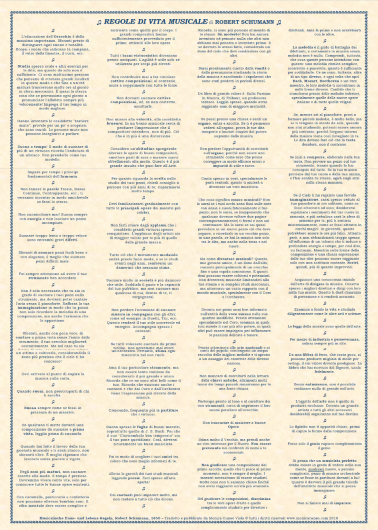
Acquista le Regole di vita musicale, di Robert Schumann. Idea regalo, ispirazione per tutti i musicisti e amanti della musica
-
Kato Havas mi ha "dato il la". Speciale della rivista di ESTA Italia
Feb 19, 21 08:33 AM
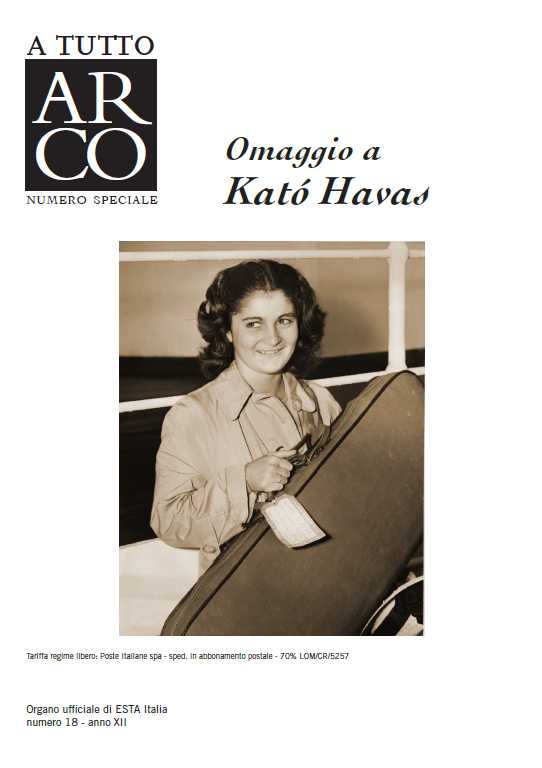
Leggi il mio articolo: Kato Havas mi ha "dato il la", pubblicato sul numero speciale "Omaggio a Kató Havas". Prenota le tue lezioni di violino o viola online
-
Online violin lessons & viola lessons. For conscious players
Oct 06, 20 05:39 PM
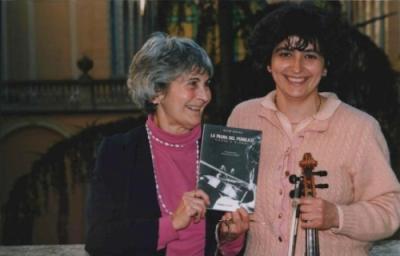
Online violin lessons & viola lessons, personalized, based on the Havas New Approach. Play violin & viola without stage fright, aches & pains, tendonitis
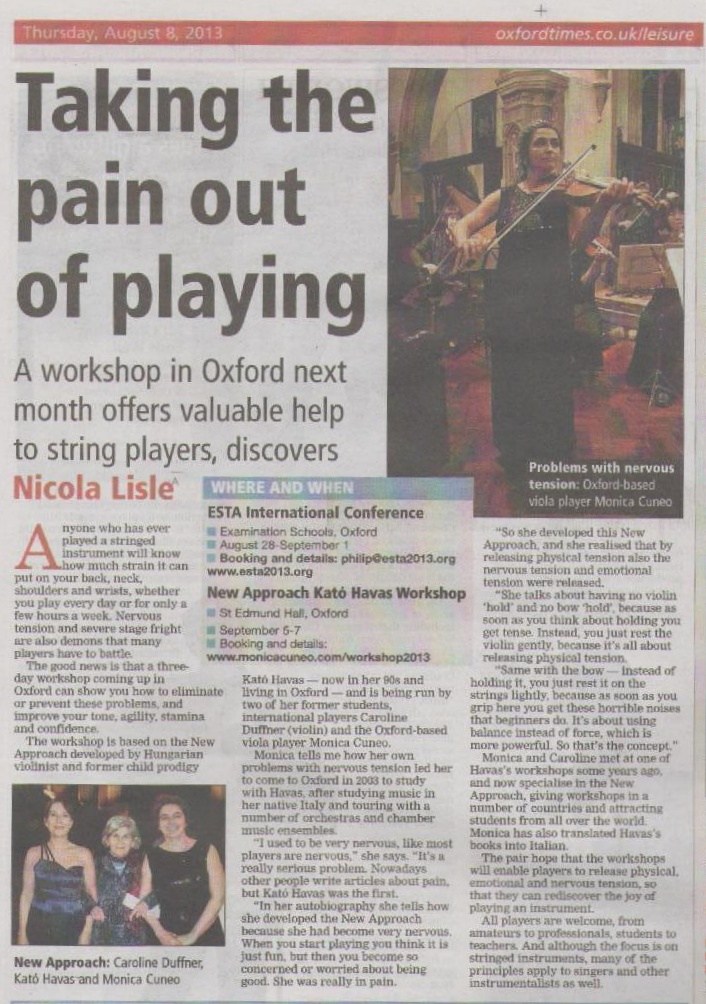
Books I translated
Letture consigliate
Mie traduzioni
ACQUISTA I LIBRI DI KATÓ HAVAS
Vuoi un seminario sul Nuovo Approccio Havas?
-->
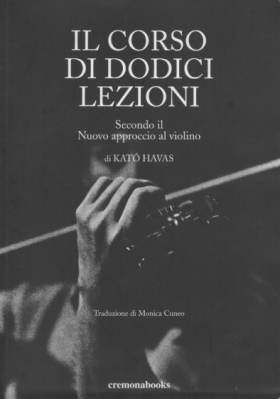
Articoli su Kato Havas e Nuovo Approccio

Ricordo personale di Kató Havas - Articolo
Kato Havas obituaries, on The Strad and The Times
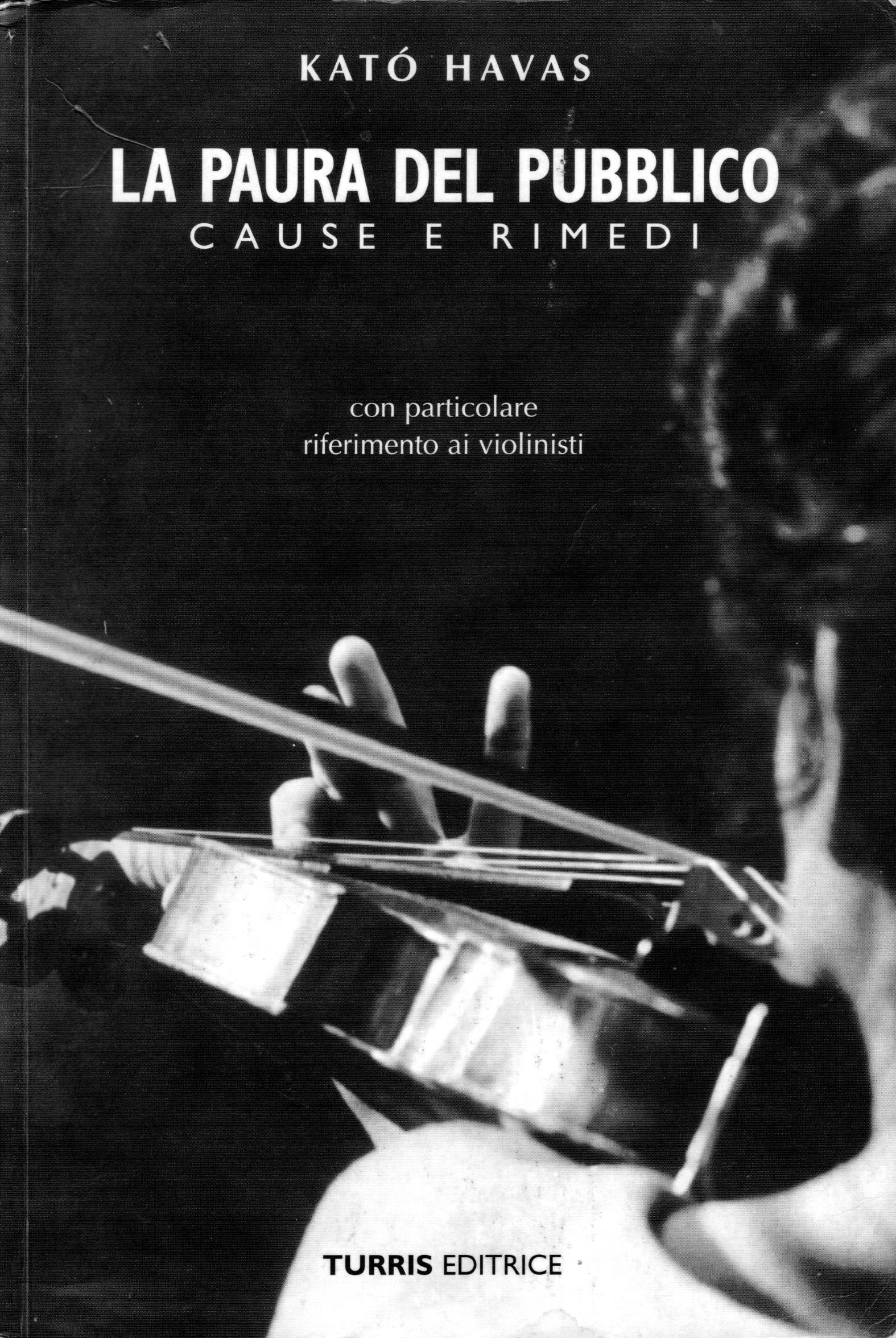
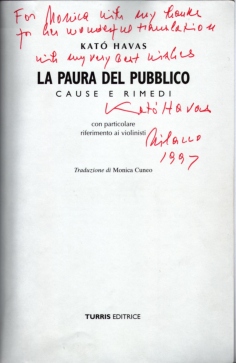
Here below are the original versions of the books I translated into Italian
Recommended readings
Some comments about my viola and violin teaching from my pupils
Recommended readings to eliminate physical injuries and stage fright
Click on them to read each book's description
I translated them into Italian, you can see them here
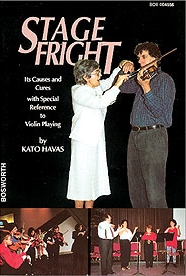
Stage fright
Its causes and cures
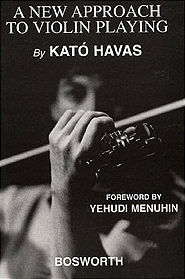
A New Approach
to violin playing
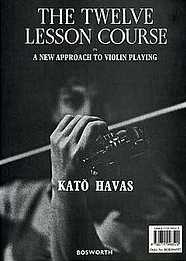


New! Commenti
Cosa ne pensi? Lascia il tuo commento qui sotto e condividi la pagina!Have your say about what you just read! Leave me a comment in the box below.